
What High Intensity Care Means for Your NDIS Plan
Some support needs take more time, more people and more skill than a standard support shift. Here is how high intensity care is described, why it is planned differently, and what you should ask a provider before you agree to anything.
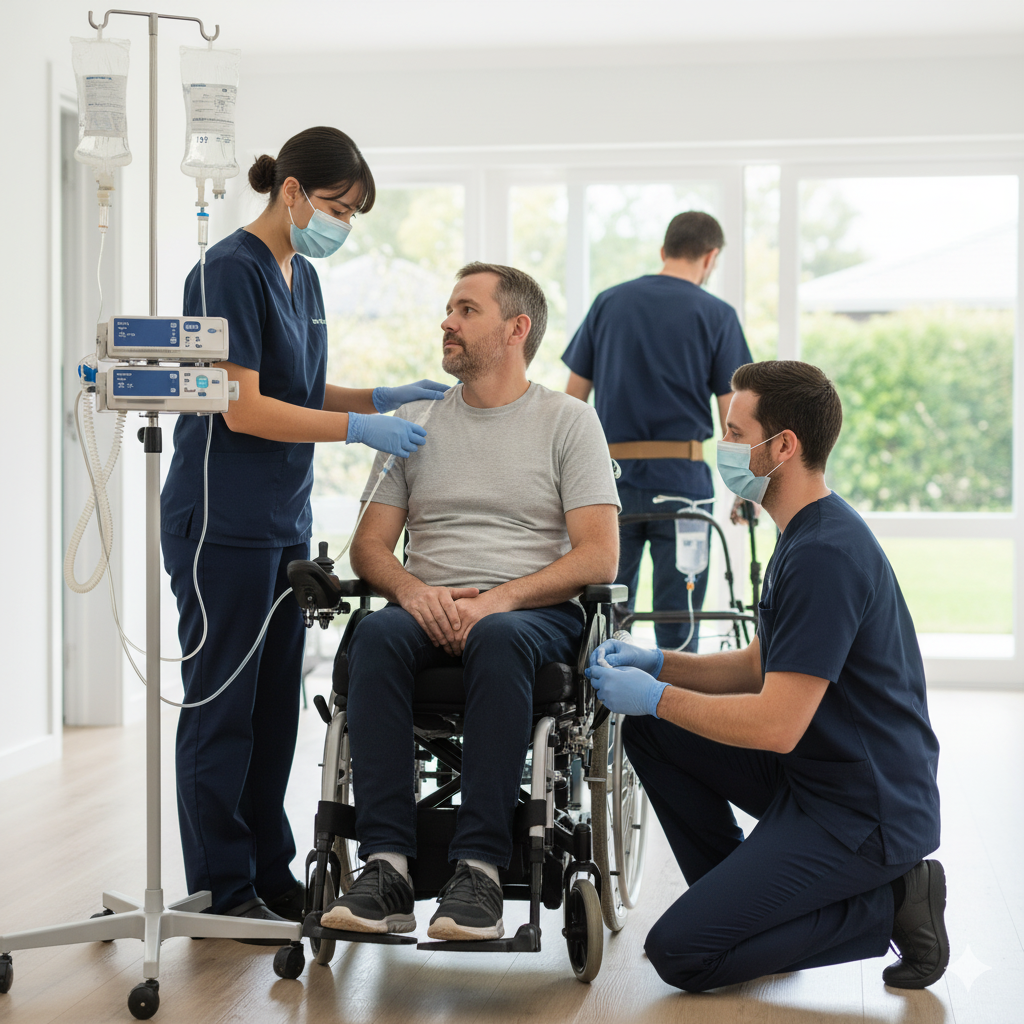
There is a particular kind of morning that reorganises an entire household. The alarm goes off in the dark, two people have to arrive at the same time because a transfer cannot be done safely alone, and everything that follows takes the best part of an hour. There is a written protocol for the order of the steps. A sling has to go on one particular way. If you live with that, you already know that a couple of hours of general support a week does not describe your life.
That kind of support has a name. It is usually called high intensity care, and it sits at the far end of what the NDIS funds. The word can sound clinical or alarming, so this guide is here to take some of the mystery out of it. We will look at what actually makes a support need high intensity, why the planning looks different, and the questions worth asking before you commit to a provider.
What makes a support need high intensity
Intensity is not about how serious a diagnosis is. It is about the practical demands a support visit places on the people providing it. A participant who needs help with a shower twice a week has a genuine need, but the visit itself is relatively contained. High intensity support has several demands stacked on top of each other.
Time is usually the first one. These plans often involve a large number of hours across the day, including evenings, weekends, or overnight sleeps. A person who cannot safely be left alone at night may have support in the home for ten, fourteen or twenty-four hours. When you stack that against travel time, handover time and sleep breaks for workers, the amount of billable support time is not the same as the number of hours someone is actually in the room.
Skill is the second. High intensity work frequently involves equipment that has to be used in a specific way, such as hoists, ceiling tracks, pressure-relieving mattresses, or feeding equipment. A worker needs training specific to that equipment and to the participant, not just a general induction. Some high intensity supports also involve behaviour that requires skill in de-escalation and in knowing when to step back and call for help.
The third is coordination. Where there are health conditions as well as disability-related support needs, the workers need to understand what the day looks like when a GP, a nurse or a therapist is also involved. Medication, continence, pressure area care and a behaviour support plan may all feed into one another.
The kinds of support that sit here
You will often hear high intensity care described as a category rather than a single service. In practice it can include:
- Complex personal care, including full assistance with transfers, positioning and skin care where skin integrity is a concern
- Two-person care, where a single worker is not permitted to carry out a particular task and a second trained person must be present
- Feeding support through a PEG or other medically managed route, which is always delivered under the guidance of a qualified nurse
- Support with complex health conditions, including asthma, epilepsy or diabetes care, where the response plan is specific and written down
- Positive behaviour support where there is an active behaviour support plan and workers are expected to implement it consistently
- Overnight or sleepover support, and waking night support where a participant cannot be left unattended
- High-hour support across a day, sometimes with workers present continuously and sometimes waking the participant at set times
A single plan can combine several of these. Someone might need two people for morning transfers, a nurse three times a week for the PEG feed, and a behaviour support plan that every worker must read before starting a shift.
Why these plans are planned differently
A standard daily living support plan and a high intensity plan are not built the same way. The difference is mostly about risk, and risk takes time to think through properly.
With high intensity supports, planning usually starts from the clinical picture rather than from a list of household tasks. Your health professionals document what is required, when it is required, and what should happen if something goes wrong. That documentation then shapes the roster, the number of workers, the training each of them needs, and the supervision arrangements.
The staffing logic is different too. Because the care depends on a specific way of doing things, sending an unfamiliar casual worker at short notice can genuinely increase risk rather than reduce it. Plans in this category usually need a smaller, more consistent pool of workers who have been trained in the participant’s specific procedures. That has consequences for how a provider schedules, and it is fair to ask any provider how they handle it before you sign a service agreement.
Two workers, one task, and the paperwork behind it
Two-person care is the requirement people ask about most often, and it is worth understanding why it exists. It is usually written into an assessment or a clinical instruction. A manual hoist with a ceiling track that crosses a room, or a bed that sits at a height that cannot be lowered safely, will generate a written instruction that a single worker must not attempt the transfer alone.
When that instruction exists, no provider can send one person. The second worker has to be booked, and the visit takes longer because you are coordinating two people’s arrival. This is one of the reasons high intensity support consumes more funded hours than the visible task might suggest, and it is a legitimate reason.
It is also reasonable to ask what happens when the second worker cannot be found. A good answer involves escalation and a fallback. An unclear answer usually means missed shifts, and missed shifts in high intensity care rarely end with a phone call.
Working alongside your health team
Nothing that involves a health condition should be worked out from memory in a bathroom at seven in the morning. High intensity plans usually sit inside a broader clinical picture: a nursing care plan, a physiotherapy program, a speech pathology assessment for safe swallowing, a behaviour support plan, or a medication management plan.
A provider who takes this work on properly will want copies of those documents, will read them, and will ensure the workers supporting you have read them too. They will flag when something has changed and ask you to go back to whoever wrote it. That is a good sign, even when it feels like extra steps.
The reverse is worth being alert to. If a provider asks a support worker to work from their own judgement on a clinical task, or suggests they can handle something your nurse said needed a nurse, that is a conversation to end rather than negotiate.
Training and continuity, and why they matter more than anything
Continuity of workers is usually described as a preference. In high intensity care it is closer to a safety measure. A worker who has never done your transfer does not know where the spare sling is, which chair the wheelchair usually parks beside, how you communicate that something hurts, or that you need a pause halfway through.
Every one of those things is small on paper. Together they are the difference between a calm morning and a bad one. Asking questions like the following is not being demanding:
- How many workers will be on my roster, and how many of them have already worked a shift with me?
- What training does each of them need before they support me, and who confirms they have done it?
- If my regular worker is unwell, how far in advance will I know, and who might be sent instead?
- Will you keep my protocols current and tell me when you change anything?
- Can I have a say in who supports me, and what happens if I do not feel comfortable with someone?
Where to go next
If you think your plan has high intensity supports in it, or you suspect it should and nobody has said so, the useful first step is a conversation with your support coordinator and a look at the plan document together. Your clinical documentation is the evidence that usually carries the most weight in that conversation.
Our team at Orchid Premium Care works alongside participants with complex support needs and their existing support teams. We would rather tell you early that a particular support sits outside what our workers can safely do than agree to it and hope. If you would like to talk through your situation, get in touch and we will make time for a proper conversation.
Want to talk about your support needs?
Every person's support plan is different. Our team can talk you through what is available, what your plan covers, and what the next step looks like. There is no obligation and no pressure.